
Mesh Content Engine: One System for Planning, Drafting, Approving, and Publishing Social Media
How I built a content engine that lets a virtual assistant and AI produce a steady stream of social media posts, while I approve everything that goes out under my business’s name.
At a glance
Mesh Cowork, my coworking space in Bakersfield, needs a steady presence on social media, and I don’t have time to write every post myself. I work with a virtual assistant on it. We needed one place where an idea could become a draft, get my approval, get published, and get measured afterward. That way the assistant keeps content moving and I only spend time on the decisions that need me.
- Business
- Mesh Cowork, a coworking space, working with a virtual assistant
- Need
- A steady flow of on-brand social posts without the owner writing each one
- Build
- Idea bank, AI drafting, an approval queue, direct publishing, and weekly reporting in one tool
- Platforms
- Facebook and Instagram publish directly; TikTok and YouTube are drafted for manual posting
- Ready for more
- Each business gets its own separate database and brand profile
The situation
Most small businesses that produce content with an assistant run into the same snags. Good post ideas come up in conversation and are gone before anyone writes them down. Writing every post from scratch, in the right voice, eats the assistant’s hours. Drafts go back and forth by text and email until it’s hard to tell which version I approved. Copying a finished post into each platform by hand takes time, so some weeks slip by with nothing published.
And without a simple report, nobody can see which posts worked, so there’s no way to do more of what performs and less of what doesn’t.
What the content engine does
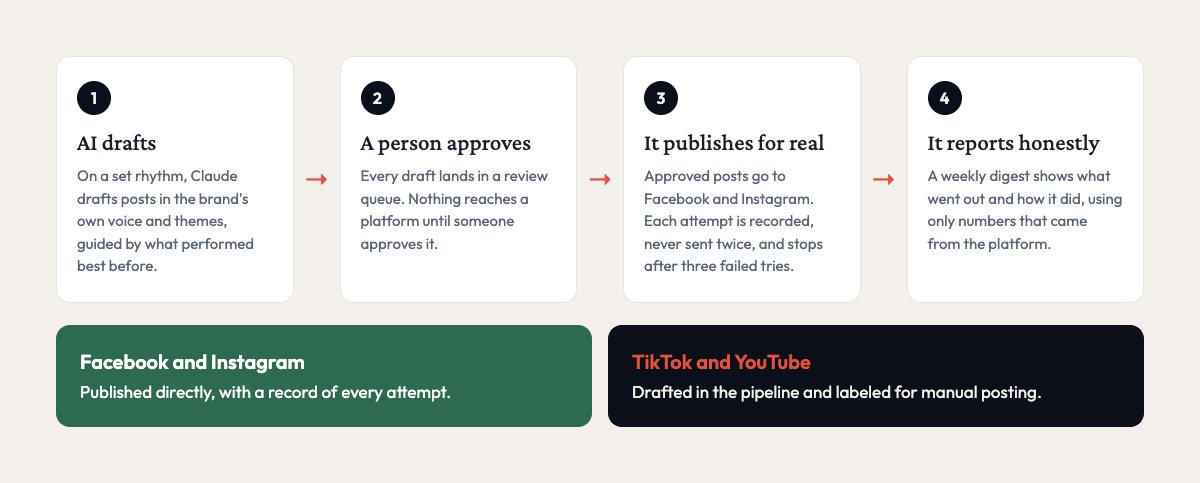
The Mesh Content Engine takes a post from idea to published in one tool. The assistant and AI do the work, and I approve it.
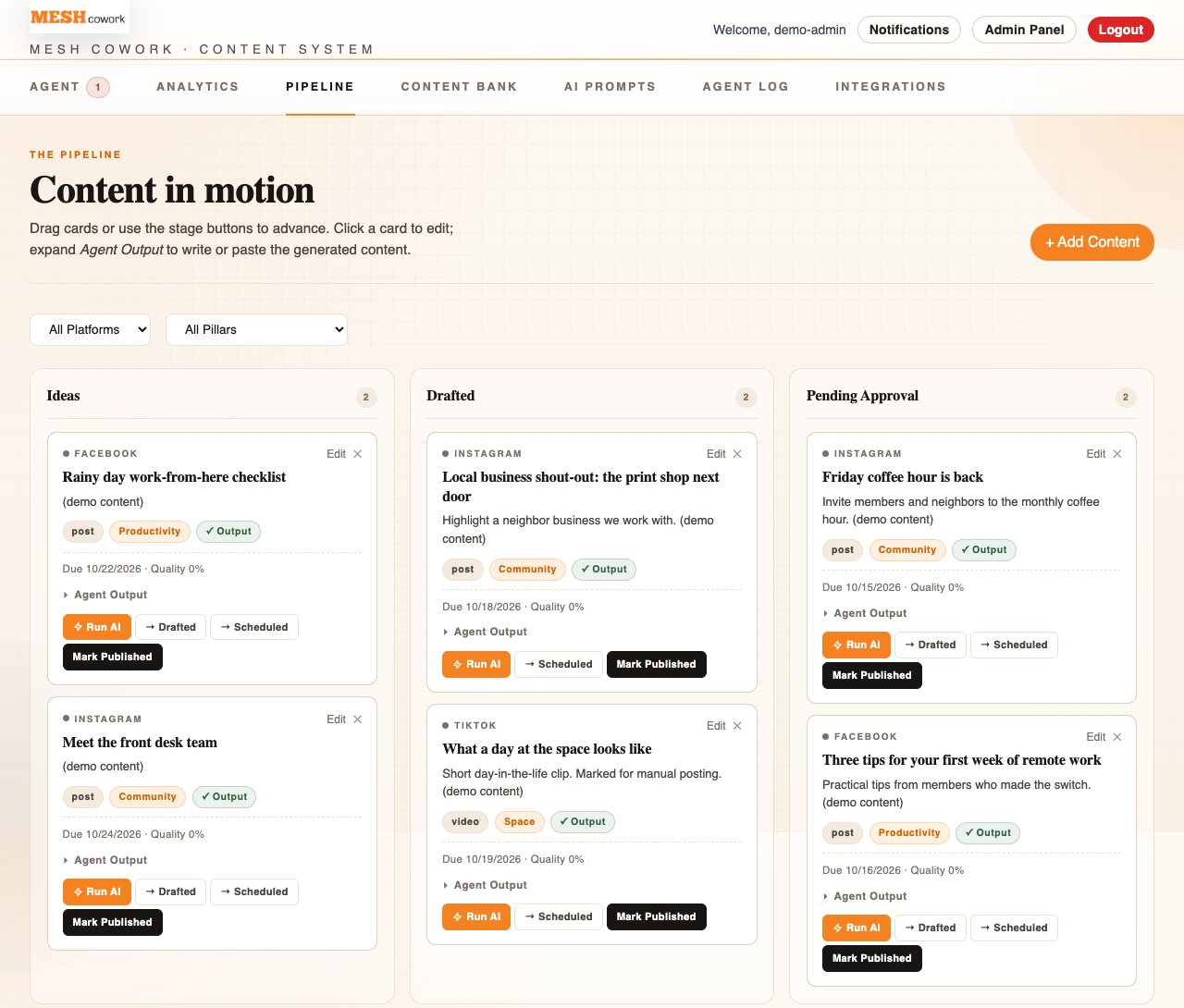
Ideas go into an idea bank as they come up. They’re sorted by theme and marked when they’re ready to become posts. From there, every post moves through the same stages on a board the whole team can see: idea, drafted, waiting for approval, approved, scheduled, and published.
Drafting is where most of the hours go, so that’s where the AI sits. The assistant can have Claude draft posts that follow the business’s own voice and themes, and the drafts learn from which kinds of posts performed best. A scheduler also drafts posts on a set cadence and drops them into the review queue, so the pipeline doesn’t run dry.
Nothing reaches a platform until a person approves it. Drafts land in a review queue, and automatic posting stays off unless I turn it on. Approved posts go straight to Facebook and Instagram. Every attempt is recorded, a post is never sent twice, and a failed post is retried up to three times and then flagged so it doesn’t fail quietly. TikTok and YouTube don’t offer simple direct publishing for a business like this, so the tool drafts those posts and labels them for manual posting.
Once a week the tool reports what was published and how it did, using numbers that come from the platforms themselves.
Two pieces are there for what comes next. Each business gets its own separate database, brand profile, and login, so one client’s content can never mix with another’s. The engine also exposes 11 actions that an AI assistant or one of my governed AI workers can use, with publishing allowed only through the approval queue.
What the content engine changed
| Before | After |
|---|---|
| Ideas scattered across conversations | One idea bank, sorted by theme |
| Every post written from scratch | AI drafts in the brand’s voice for the assistant to refine |
| Approvals lost in texts and email | One review queue; nothing goes out without approval |
| Posts copied into each platform by hand | Facebook and Instagram publish directly, with a record of every attempt |
| No view of what worked | A weekly digest of what was published and how it performed |
| Built for one business | Separate database and brand profile for each business |
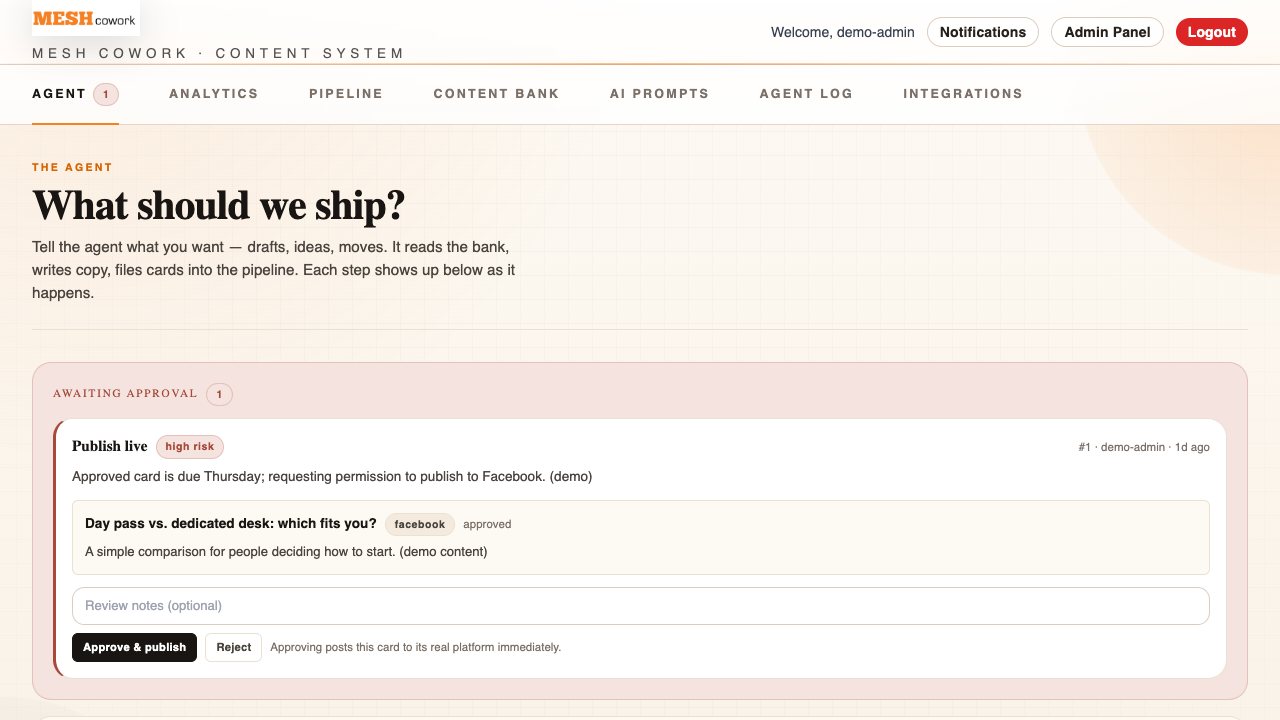
Day to day, the assistant and the AI handle the volume: ideas, drafts, scheduling, and posting. I make the call on what goes out under my business’s name. Every step shows up on the board, and every published post has a record.
If you have an assistant on social media
Give them a shared pipeline instead of a to-do list buried in your texts, so both of you can see what’s in progress and what’s waiting on you. Let AI write the first draft. Editing a decent draft in your voice is much faster than starting from a blank page. Keep the approval step for yourself, since your name is on everything that gets posted.
Want social media that keeps moving without taking over your week?
I build content systems for small businesses: an idea bank, AI drafting, approvals, publishing, and reporting in one place, set up for you and your assistant or team. If social media keeps slipping down your list, let’s talk.